
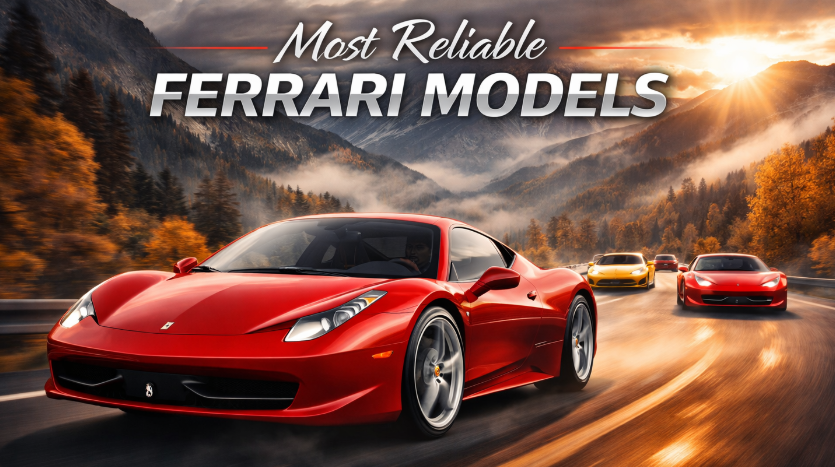

There’s a story that follows Ferrari around like a shadow. You’ve probably heard it the one about Italian sports cars being temperamental garage queens, spending more time on lifts than on the road. Top Gear once bought three Italian sports cars for under £10,000 and attempted a simple commute, only to be defeated by electrical gremlins, oil leaks, and overheating Ferrari ownership costs and maintenance
Here’s the truth, though: that reputation isn’t entirely fair anymore.
I’ve spent years talking to Ferrari owners, mechanics, and collectors. And what I’ve learned is that while Ferraris demand respect and a healthy maintenance budget certain models have proven themselves surprisingly reliable. Some have even crossed the 200,000-mile mark . Yes, you read that right.
So if you’ve been dreaming of owning a Prancing Horse but scared off by horror stories, this guide is for you. Let’s separate myth from reality and find the Ferrari that won’t just thrill you it’ll actually get you home.
What Makes a Ferrari Reliable?
Before we dive into specific models, let’s understand what “reliable” means in Ferrari terms. This isn’t Toyota Corolla territory. Reliability here means:
- Predictable maintenance costs rather than unexpected catastrophes
- Fewer common failure points known to plague the model
- Availability of parts and knowledgeable specialists
- Chain-driven engines that eliminate expensive belt changes
As multiple Ferrari specialists note, the most reliable Ferraris are those built in higher numbers (better parts availability) and those with less complex electronics .
The Top Most Reliable Ferrari Models
1. Ferrari 308 The Surprising Survivor
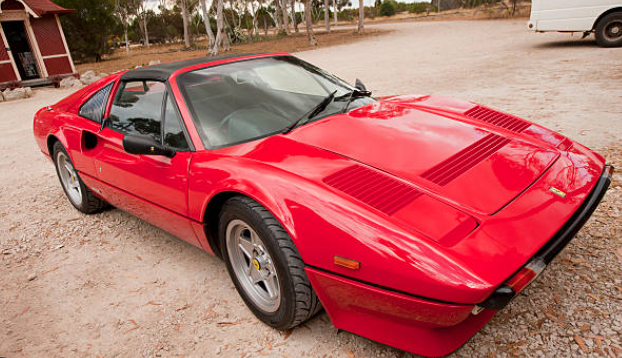
Let’s start with a model that might surprise you: the Ferrari 308. Made famous by Magnum P.I., this wedge-shaped beauty represents a turning point for Ferrari.
Why it’s reliable:
- Produced in relatively high numbers (over 12,000 units), which means better parts availability
- Designed as an entry-level model with less stressed components (205-255 horsepower)
- Less power means less mechanical stress and fewer breakdowns
The catch: These are now classic cars, 40+ years old. Kevin Enderby, a well-known Ferrari enthusiast, owns a 308 with over 241,000 miles—widely considered the highest-mileage Ferrari in existence . But such longevity requires obsessive maintenance. You’ll deal with aging rubber components, fuel lines, and bushings regardless of mileage .
Expert insight: One FerrariChat member who owned a 328 (the 308’s successor) notes that while the car was reliable, “in 9 years of ownership keeping her in tip-top shape, I still ended up with around 20 FUs” (Ferrari Units, their term for unexpected expenses) .
Best for: Collectors who appreciate classic Ferrari character and don’t mind regular refurbishment work.
2. Ferrari F430 – The Chain-Driven Game Changer
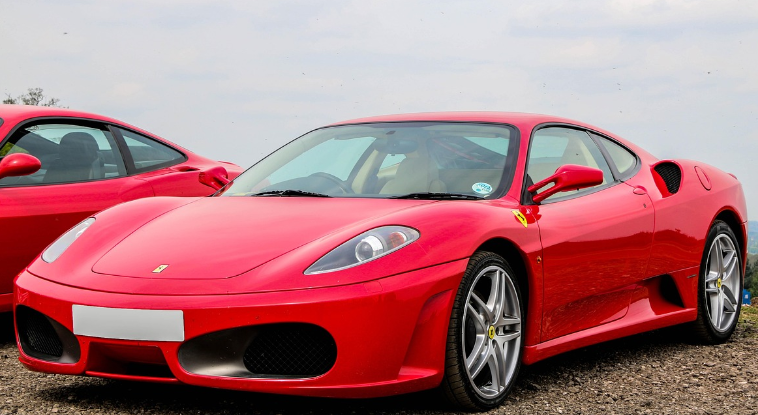
The F430 represents a pivotal moment in Ferrari reliability. Introduced in 2004, it was the first V8 Ferrari to use a timing chain instead of a belt—a massive improvement for maintenance costs.
Why it’s reliable:
- Timing chain eliminates the dreaded engine-out belt service
- More refined F1 transmission compared to the 360
- Parts remain readily available
- Sporty yet fast enough for modern driving
What owners say: “The 430 is the best ‘starter’ Ferrari under $160k, over that, 458. Chains instead of belts. Major service doesn’t need engine drop” .
Common issues to watch:
- Stock exhaust and taillight concerns (expensive replacements)
- Early F1 transmission wiring issues on some examples
- Water seepage in convertibles
Real-world story: One F430 owner shared: “Car has been flawless and only NEEDED a 50K km service so far in 2 years ownership (did do more, but that’s personal preference like exhaust). We put in monthly contributions to a maintenance fund” .
Best for: First-time Ferrari buyers who want modern performance without the belt-service headache.
3. Ferrari 458 Italia – The Modern Benchmark
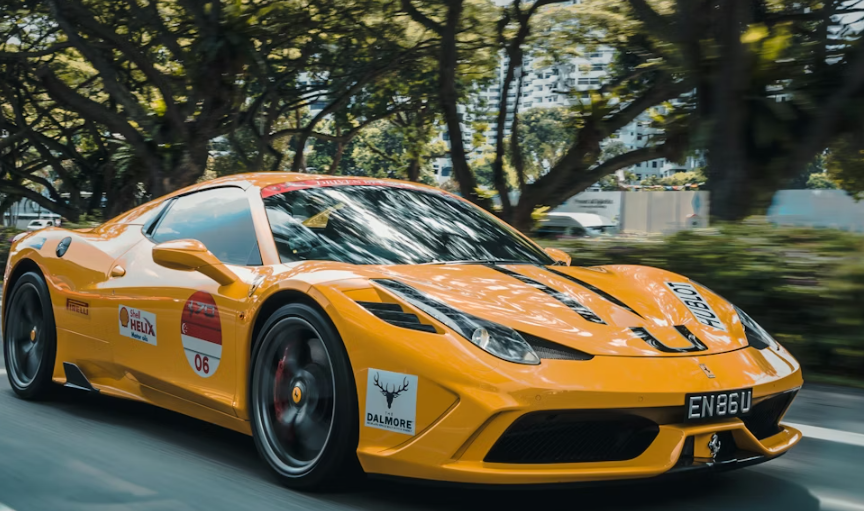
If the F430 was a step forward, the 458 Italia was a leap. Widely considered one of Ferrari’s greatest modern achievements, it’s also remarkably dependable for a supercar.
Why it’s reliable:
- Chain-driven V8 with high-revving character
- Well-made and generally reliable compared to older models
- Multiple examples with close to or over 100,000 miles
Owner perspective: Ben McCaulder, a 458 owner for three years, told Autocar: “I was encouraged by their known reliability and easier maintenance than earlier cars. Servicing is reasonable… What has surprised me most is its usability. It will rev to 9000rpm and dance like a true supercar but then be perfectly civil when you drive it normally” .
Known issues to check:
- Early models had a recall for rear wheel arch adhesive that could combust (recall performed by dealers)
- Speed sensor wiring damage can cause gearbox to miss shifts
- Carbon ceramic brakes are eye-wateringly expensive to replace (around £10,000 for a full set)
- Convertible roof mechanisms on Spiders can jam
Best for: Buyers seeking modern supercar performance with a proven reliability track record.
4. Ferrari California T The Everyday Ferrari
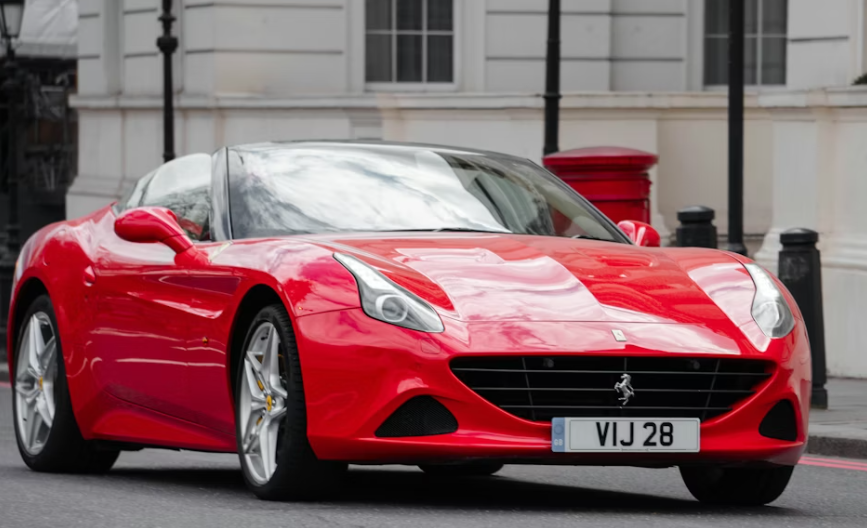
The California was designed as a more usable, daily-driver Ferrari. The turbocharged California T (2014 onward) refined that formula further.
Why it’s reliable:
- 3.9L twin-turbo V8 with good power delivery
- Front-engine layout allows easier access for maintenance
- Designed for higher production volume
- Received a reliability rating of 4.2 out of 5 from automotive experts
What to know: The California T drives and handles exceptionally well while maintaining comfort suitable for daily use . The 7-speed dual-clutch transmission is generally robust, though higher-mileage examples (80,000-120,000 km) can develop shift hesitation .
Best for: Buyers who want to actually drive their Ferrari regularly, not just on weekends.
5. Ferrari F12berlinetta – The V12 That Surprises
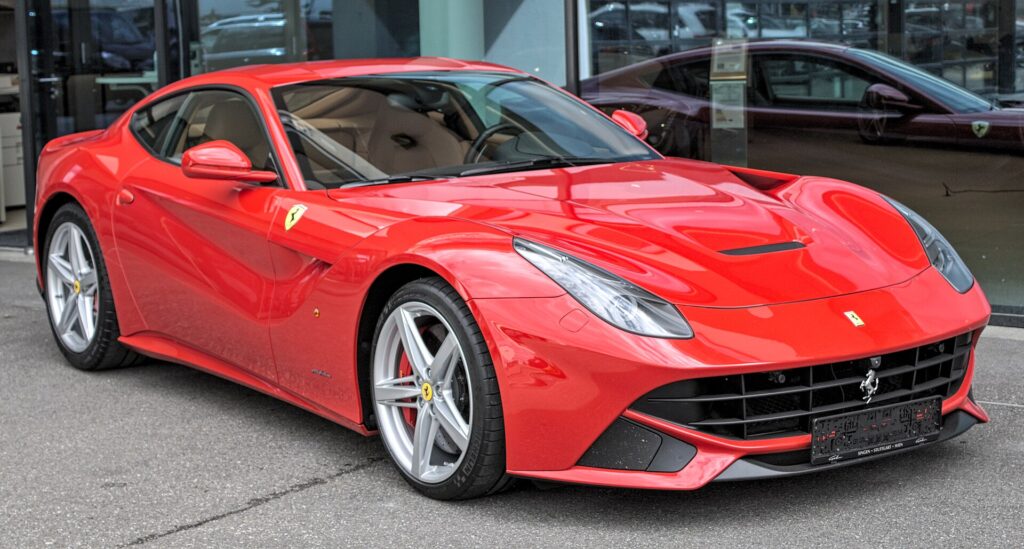
You wouldn’t expect a 730-horsepower front-engine V12 grand tourer to be considered reliable. Yet the F12berlinetta has earned a reputation for surprising dependability.
Why it’s reliable:
- Naturally aspirated V12 with proven architecture
- Built as a grand tourer, not a pure track weapon
- Owners report fewer issues than expected for such high performance
The trade-off: Maintenance costs remain astronomical. A set of carbon ceramic brake discs and pads can cost around £10,000. Insurance is sky-high, and fuel consumption is, well, what you’d expect from a 6.3L V12 (about 13 MPG city) .
Owner reality: One enthusiast noted that while the F12 is generally reliable for a Ferrari, “electronic glitches, such as issues with the infotainment system, sensors, or warning lights, have been reported. These can often be resolved with software updates, but diagnosis can be time-consuming” .
Best for: V12 purists who can afford the running costs and want a car that delivers both performance and surprising dependability.
Ferrari Reliability Comparison Table
| Model | Years | Engine | Timing | Key Reliability Feature | Common Issues | Best For |
|---|---|---|---|---|---|---|
| 308/328 | 1975-1989 | V8 | Belt | Simple electronics, high production numbers | Aging components, rubber parts | Classic collectors |
| 360 Modena | 1999-2004 | V8 | Belt | Improved build quality | F1 transmission issues, belt service | Enthusiasts on budget |
| F430 | 2004-2009 | V8 | Chain | No engine-out service | Exhaust, taillights, early F1 issues | First-time buyers |
| 458 Italia | 2010-2015 | V8 | Chain | High-mileage examples exist | Speed sensor wiring, brake costs | Modern performance seekers |
| California T | 2014-2017 | V8 Turbo | Chain | Designed for daily use | Transmission programming at high miles | Daily drivers |
| F12berlinetta | 2012-2017 | V12 | Chain | V12 reliability | Electronic glitches, brake costs | V12 enthusiasts |
Real-World Reliability Evidence
The High-Mileage Champions
Kevin Enderby’s 308 isn’t the only high-mileage Ferrari out there. Multiple 458 Italias have crossed the 100,000-mile mark, and there are F430s with similar numbers . What’s the secret?
Regular maintenance. These owners didn’t just buy and drive. They followed service schedules religiously, addressed issues immediately, and worked with trusted specialists.
Doug DeMuro’s Surprising Claim
Automotive journalist Doug DeMuro once said his Ferrari 360 Modena was the most reliable car he’d ever owned. Let that sink in—a Ferrari was more dependable than his daily drivers .
YouTube Reality
YouTuber Sam Fane (Seen Through Glass) has taken his 360 Modena and 360 CS on numerous European adventures, racking up thousands of miles without major breakdowns .
The common thread? These owners bought well-maintained examples and stayed on top of service.
How to Buy a Reliable Ferrari: Expert Tips
1. Buy the Seller, Not the Car
FerrariChat members consistently emphasize this: “Get to know your local club, and the people in it, and their cars. The best ones will likely not be advertised. It will be a friend of a friend selling something” .
2. Budget for Maintenance
A Ferrari owner’s rule of thumb: “Be ready to spend 50% of purchase cost on repairs in the first year. If you don’t, it’s still in your bank. If you do, you went in thinking it was lost money anyway” .
3. Get a Pre-Purchase Inspection (PPI)
Never buy without a PPI from a specialist who knows the specific model. Pay special attention to:
- Service history (full records are essential)
- Gearbox operation (test all gears, listen for unusual sounds)
- Electronic functions (check every button and screen)
- Brake wear (carbon ceramics are expensive to replace)
4. Consider Warranty Options
For modern Ferraris (458 onward), an extended warranty from Ferrari can provide peace of mind. The Genuine Maintenance Programme covers seven years of scheduled maintenance, which is transferable and adds resale value .
5. Join the Community
Local Ferrari clubs are invaluable resources. Members share mechanic recommendations, warn about problem cars, and often know about private sales before they hit the market .
Frequently Asked Questions
1. Which Ferrari is most reliable overall?
Based on owner reports and expert consensus, the Ferrari 458 Italia is widely considered the most reliable modern Ferrari. Its chain-driven V8, robust engineering, and established parts network make it a dependable choice—for a supercar . For those seeking a classic, the 308/328 series has proven longevity, though age-related maintenance is unavoidable.
2. How much does Ferrari maintenance cost annually?
Budget between $3,000 and $8,000 per year for routine maintenance on modern Ferraris, depending on mileage and usage. Major services (every 3-5 years) can exceed $10,000. For V12 models like the F12, annual costs can easily reach $12,000–$15,000 when including insurance, tires, and unexpected repairs .
3. Are Ferraris expensive to insure?
Yes. Insurance for a Ferrari typically ranges from $5,000 to $15,000 annually, depending on the model, your driving history, and annual mileage. Many insurers require agreed-value policies that reflect the car’s market worth .
4. Can you daily drive a Ferrari?
Absolutely with the right model. The California T, Portofino, and Roma are designed with daily usability in mind. Owners report these models handle traffic, speed bumps, and grocery runs surprisingly well. Just budget accordingly for maintenance and accept that depreciation will be higher with higher mileage .
5. Which Ferrari should I avoid if reliability is a priority?
Avoid early F355s (valve guide issues, expensive engine-out services), Mondials (complex maintenance, parts scarcity), and any Ferrari with poor service history. Also be cautious with high-mileage Portofinos (8-12万公里) as they can develop transmission and electronic issues requiring expensive repairs .
Conclusion Your Reliable Ferrari Awaits
Let’s be honest: no Ferrari will ever match a Honda Civic for reliability. These are high-performance machines built for passion, not practicality. But that doesn’t mean you need to accept constant breakdowns.
The F430, 458 Italia, and even the classic 308 have proven that Ferraris can be dependable when properly maintained. The key is understanding what you’re getting into and preparing accordingly.
If you’re ready to take the plunge, start with these steps:
- Join your local Ferrari club
- Drive different models to find what speaks to you
- Find a trusted specialist for pre-purchase inspections
- Budget at least 20-30% over purchase price for first-year maintenance
- Buy the best-maintained example you can afford
Remember what one Ferrari owner wisely said: “Don’t buy a car if you’re worried about the cost of maintenance. Obviously consider it as a factor, but if you’re buying a sports car and a Ferrari to be exact, go with what you want and just have some money set aside for problems” .
Which Ferrari model has caught your eye? Have you owned one of the models mentioned above? Share your experience in the comments below I’d love to hear your story. And if this guide helped you, please share it with a fellow enthusiast who’s dreaming of their first Prancing Horse.